Meal Prep: What It Is, What It Saves, and Where It Fails
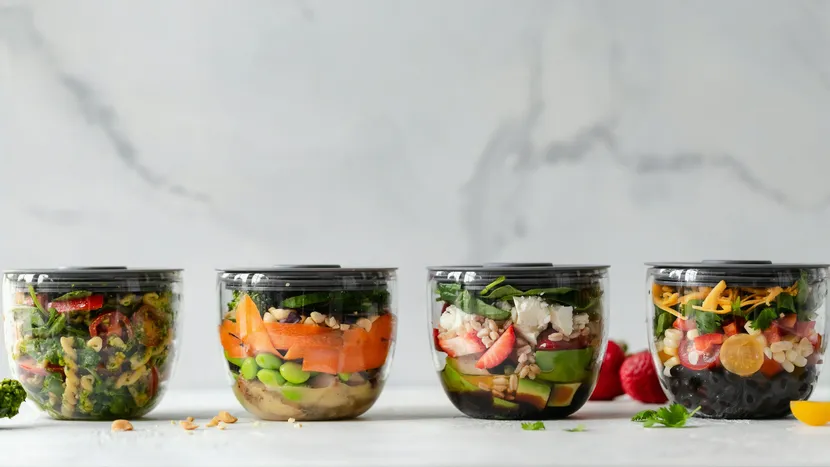
Meal prep is one of those habits that sounds like it belongs to fitness influencers and people with six matching containers. It does not. At its plainest, it is doing some of the week's cooking while you already have the kitchen open, so that the version of you who gets home at seven has something better than a decision to make.
This guide covers what meal prep actually involves, what it genuinely saves, where it reliably goes wrong, and how to start without turning a Sunday into a marathon.
What Meal Prep Actually Is
Meal prep is the practice of preparing food ahead of time, usually for three or four days at once. That is the whole idea. What varies is how far you take it, and there is no correct answer.
Most people end up doing one of four things:
Batch cooking. One big pot of something, portioned out across the week. Chilli, curry, soup, ragu. The lowest effort and the fastest to get boring, though the boredom is a design problem rather than an inevitability.
Make-ahead meals. Complete dishes, cooked and stored, that need reheating and nothing else. The most convenient on the night, the most work upfront.
Component prep. A grain, a protein and two vegetables, cooked separately and combined differently each day. More variety from the same effort, which is why it is the one most people settle on.
Ingredient prep. Nothing is cooked, things are just ready: vegetables washed and chopped, chicken portioned, dressing mixed. Best if you like cooking and only want the tedious part removed.
You do not have to pick one and stay there. Most weeks end up as a mix, and the point is not to prep every meal. Three dinners handled is already the difference between a week that works and one that ends in takeout.
What It Actually Saves You
The benefits get oversold, so here they are at their real size.
Weeknight time. You do not save time overall so much as move it. One session replaces four rounds of chopping, four pans and four lots of washing up, and it lands the saving on the evenings when you have the least to spare.
The daily decision. The question of what to eat gets asked once, on a full stomach, rather than every evening on an empty one. This is the benefit people underrate most and feel the fastest.
Money. Buying for planned meals means fewer impulse buys and less forgotten produce. Waste is where most of it goes: the vegetables bought with good intentions and thrown out on bin day.
Portion control. Food gets divided before you are hungry rather than after, which is a meaningfully different decision.
A floor under bad weeks. The real test is not the calm week. It is the day that runs long, when something already cooked is faster than ordering.
Consistency. Repeating meals you know you like beats optimising ones you never cook. Prep makes the repeating easy.
Where Meal Prep Goes Wrong
Most people who quit hit one of three things, and all three have a fix.
Boredom. Four identical containers is a fast way to resent your own cooking. Prep components rather than finished plates, and change the sauce. Swapping one sauce does more for variety than cooking a different dish.
The upfront cost. Blocking out a whole Sunday afternoon is the plan people abandon first. Start with two dinners and one lunch. A ninety-minute habit survives a bad week; a four-hour ritual does not.
Storage and food safety. Cooked food keeps three to four days in the fridge, and cooling it before sealing prevents the condensation that shortens that. Anything beyond four days belongs in the freezer, labelled with a date.
How to Start This Weekend
Pick three meals you already know how to cook. Prep is the wrong moment to try an unfamiliar recipe, because a mistake now multiplies by four portions.
Check what overlaps. Two recipes sharing an onion, a tin of tomatoes and half a bunch of cilantro is one shop instead of two, and less left over to throw out.
Shop once, from one list. Ingredients from every planned meal on a single list, merged, so the same item is not bought twice.
Cook in one pass. Start whatever takes longest, then work around it. Oven first, stovetop second, anything raw last.
Portion while it is still warm, chill before sealing. Then label the lids, because by Wednesday everything in a fridge looks like everything else.
Choosing Containers
Use what you own for the first few weeks. Once the habit sticks, the choice between glass, plastic and stainless steel is a real one, and each is genuinely better at something: glass for reheating and not staining, plastic for weight, steel for durability and lunches on the move. We compared all three in detail in best containers for meal prep.
Planning or Prepping?
These get used interchangeably and are not the same thing. Planning is deciding what you will eat and when. Prepping is cooking some of it ahead. Planning is the one that changes what you buy, which is why it saves more money, and it is also the easier place to start because it costs ten minutes rather than an afternoon. The full comparison is in meal prep vs meal planning.
A planner does three things, in order. It assigns specific meals to specific days, which is what makes it a plan rather than a wish. It fixes your shopping, because once the week is decided the list follows from it. And it absorbs changes, so moving Thursday to Saturday is a two second job rather than an excuse to abandon the week.
Plan a week at a time. It matches how most people shop and it is short enough to survive contact with reality. Two week plans collapse the first time a night changes, because by then half the ingredients have been bought for meals nobody wants any more, and planning two or three days does not save you a trip, which was most of the point. You do not need to plan every meal either. Dinners are where the decision fatigue lives, and breakfast and lunch tend to run on habit.
Paper, a spreadsheet and an app all work, and they fail differently. A fridge whiteboard is the fastest to start and it is visible to everyone in the house, which matters more than it sounds, but it does not know your recipes, so the shopping list is still written by hand and rewritten whenever the plan moves. A spreadsheet suits people who like structure and is unpleasant to open in a supermarket. The advantage of an app is not the calendar, it is the connection: the planner knows the recipes, so the list builds itself and quantities add up across meals.
Planning earns its keep if you shop more than once a week without meaning to, throw away vegetables, or find the question of what to cook genuinely tiring by Wednesday. It is worth less if you already cook the same handful of meals on rotation and are happy doing so. That is a plan, just one you keep in your head.
If Your Goal Is Weight Loss
Meal prep does not cause weight loss. What it changes is when you decide what to eat, not what you decide. Everything useful about it follows from the first, and every disappointment with it comes from expecting the second.
The mechanism is worth stating plainly. What defeats most attempts is not a lack of knowledge, it is six o'clock: tired, hungry, no answer to what is for dinner, and a phone with a menu on it. Nobody makes a considered choice in that state, which is why plans that work perfectly on Monday morning fail on Wednesday evening. Prepping moves the decision to a calm Sunday. That is the whole trick, and it is a good one, because it takes the choice away from the version of you least equipped to make it.
Which is why the usual claims are half right. Pre-portioning works because the portion was settled by someone who was not hungry, not because the container exerts discipline. Prep removes the excuse that nothing is ready, which is a real excuse worth removing, but it does not remove wanting the thing.
Four things go wrong specifically here. You prep food you do not actually want, and food you dread gets replaced at the first opportunity, so the afternoon is spent and the takeout is eaten anyway. You prep too many days, and the last containers get skipped, which reads as a personal failure and is actually a storage fact. You treat prepped as free, when a meal being pre-made says nothing about its size. And it becomes the whole plan, when prep only executes a decision made somewhere else. If that decision is vague, prepping executes vagueness efficiently.
I make a recipe app, not a nutrition qualification. For anything about your own body, a doctor or a registered dietitian is the right person to ask, and worth asking before making significant changes.
Keeping It Going
Worth saying that meal prep only answers two of the five reasons people stop cooking, so if it has not stuck for you before, it may have been aimed at the wrong one.
The part that fails is rarely the cooking. It is that the recipes live in six places, so planning the week means hunting through Instagram saves, screenshots and a bookmark you cannot find, and rewriting the same shopping list every time.
That is the job AnyRecipe does. Recipes you save from anywhere land in one cookbook, the planner fills a week from the ones you already have, and every planned ingredient collapses into a single shopping list with the duplicates merged. The prep session stays yours. The admin around it stops being a reason to skip it.
Frequently asked
How long does a meal prep session take?
One to two hours covers three or four days for most people. That is close to what those meals would have taken anyway, minus the repeated washing up and the repeated deciding.
How many days should I prep at once?
Three or four. Past that, quality drops and the last containers get skipped, which wastes both the food and the afternoon you spent on it.
Do I need special containers to start?
No. Use what you own for the first few weeks and see whether the habit sticks. Buying a matching set before you know that is how unused containers end up at the back of a cupboard.
What is the difference between a meal planner and meal prep?
A planner decides what you will eat and when. Prep is cooking some of it ahead. Planning is the one that changes what you buy, so it is where the money is saved, and it costs ten minutes rather than an afternoon.
How far ahead should I plan meals?
A week, because that is how most people shop. Longer plans fall apart the first time something changes, and shorter ones do not save you a trip.
Does meal prepping cause weight loss on its own?
No. It changes when you decide what to eat, not what you decide. A fridge of prepped food supports whatever plan you already had, which is genuinely useful and is not the same as being a method in itself.