The Six O'Clock Decision: Why Choosing Dinner Is So Hard
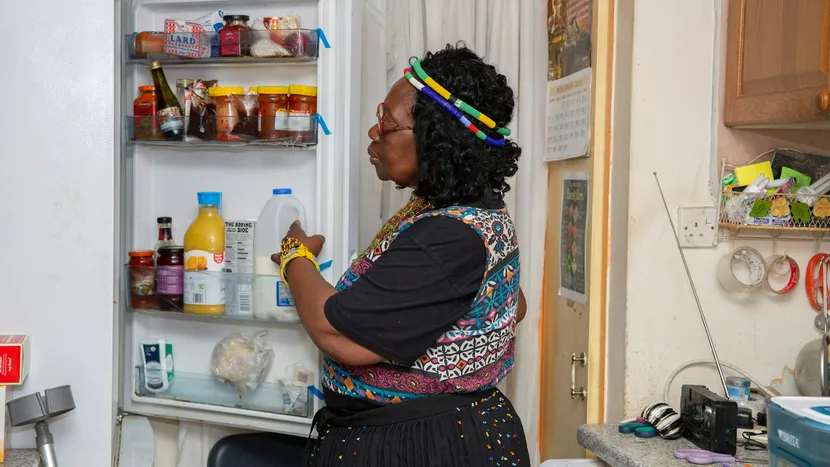
Deciding what to have for dinner takes about two minutes and is one of the most reliable failures in adult life. That mismatch is the interesting part. Nobody is defeated by a two minute task, which means the difficulty is not in the task.
It is in when you are attempting it.
What is actually happening at six o’clock
Four things are true at once, and each of them makes deciding worse.
You are hungry. Hunger narrows what sounds appealing towards fast, salty and immediate, which is exactly the category the delivery app occupies and exactly not the category of a thing you have to cook first.
You have already decided all day. Whatever your job is, it consumed decisions, and they do not replenish on the walk home. The last decisions of a day are the worst ones you will make, and dinner is almost always one of the last.
The question has no boundaries. “What should we eat” has hundreds of valid answers and no criteria for choosing between them. An unbounded question with a tired person attached to it does not resolve. It gets abandoned.
You need the answer immediately. There is no room to think, because thinking is time you do not have and the outcome is needed now.
Put those together and the failure is completely predictable. It is not a character flaw. It is asking the wrong version of yourself a badly formed question at the worst available moment.
The two minute version
Here is the same decision on a Sunday afternoon.
You are not hungry. You have made few decisions today. You can look at what you actually have and what you actually feel like eating this week, with no urgency, and if you get it wrong the cost is nothing because you can change it later.
It takes two minutes. Genuinely. The reason it feels like a chore in prospect is that you are imagining the six o’clock version, which is the hard one, and assuming the Sunday version is the same task. It is not the same task. It is a different task that happens to have the same words in it.
This is the entire idea, and everything below is just how to make it stick.
Four, not seven
The most common way planning fails is planning too much.
Seven dinners assumes seven cooking evenings. You will not have seven. Something will run late, someone will suggest going out, one night you will be too tired in the way that no amount of planning fixes. Then the plan is broken, and a broken plan tends to get thrown away entirely rather than adjusted, because the whole thing now feels like a failure.
Four dinners leaves three nights loose. Leftovers cover one, something goes wrong on another, and you order on the third without it counting as falling off the wagon, because it was never on the plan to begin with.
Plans that expect their own failure survive it.
Do not assign them to days
Small change, disproportionate effect: decide the four meals, but not which night each one lands on.
Fixing dinners to days creates a second decision point, because Tuesday arrives and you do not want the Tuesday thing, and now you are negotiating with a schedule instead of cooking. Four meals in a pool means every night you pick from four options rather than from everything, and picking from four is easy even at six o’clock. The bounded question is the point.
The exception is anything with a deadline. If the fish needs using by Wednesday, that one has a day.
The rotation nobody wants to admit works
If planning every week feels like homework, do not plan every week.
Write down eight or ten meals you genuinely like and can cook without concentrating, and cycle them. That is it. Most people resist this because it sounds like an admission of dullness, and then discover that they were already eating a rotation of five, just less deliberately and with more anguish attached.
Restaurants run fixed menus. Nobody accuses them of lacking imagination. Variety is nice, and you can add a new meal whenever you feel like it, but it is a luxury sitting on top of the system rather than the system itself.
Where the deciding actually breaks
You sit down on Sunday intending to plan, and the recipes are in six places.
Some in Instagram saves. Some screenshotted. One in a text from your sister. Three bookmarked in a browser you no longer use. A cookbook with two things you have actually made. Deciding what to cook this week requires first assembling the options, and assembling the options is genuinely tedious, so the Sunday plan does not get made and you are back at six o’clock.
The deciding is easy. The gathering is what defeats it. That is worth knowing, because it means the thing to fix is not your discipline.
What to do this week
Get your recipes into one place where you can see them all at once. Any one place. A note with links in it is fine.
Then, on Sunday, pick four. Write the shopping list from those four. Shop once.
At six o’clock on Tuesday you will not be deciding what to eat. You will be choosing between four things you already wanted, which is a question you can answer while hungry and tired, because it has four answers instead of infinite ones.
If getting the recipes into one place is the bit that keeps not happening, that is the job AnyRecipe does. Share a reel or a page or photograph a cookbook, and it comes back as a real recipe with the ingredients separated, so the collection builds itself out of things you were already saving. Then the week is four taps and the shopping list writes itself from it. Free to download on iPhone and iPad.
If the deciding is not your broken link, the five reasons people do not cook covers the other four, and this one is only useful for one of them.
Frequently asked
Why is it so hard to decide what to cook?
Because of when you decide, not what you are deciding. At six o'clock you are hungry, tired and out of decisions for the day, and the choice is open ended with hundreds of options and no criteria. The same choice on a Sunday afternoon takes two minutes.
What is decision fatigue?
The observation that deciding gets worse the more of it you have already done. By the end of a working day the easy default wins over the better option, which is why dinner is ordered rather than cooked at seven and not at three.
How many meals should I decide in advance?
Four dinners for a seven day week. Deciding all seven produces a plan that breaks on the first unplanned evening, and a broken plan tends to get abandoned rather than adjusted.
Does a fixed weekly rotation work?
It works better than most people expect and is worth trying if planning each week feels like a chore. Pick eight or ten meals you actually like and cycle them. Restaurants run fixed menus for a reason.